





Vinobird

Article
Julie Balagny: A Life of Freedom
From Paris to Fleurie, Julie Balagny followed her own path in Beaujolais. A story of Gamay, nature, freedom in winemaking, and a life cut short too soon.
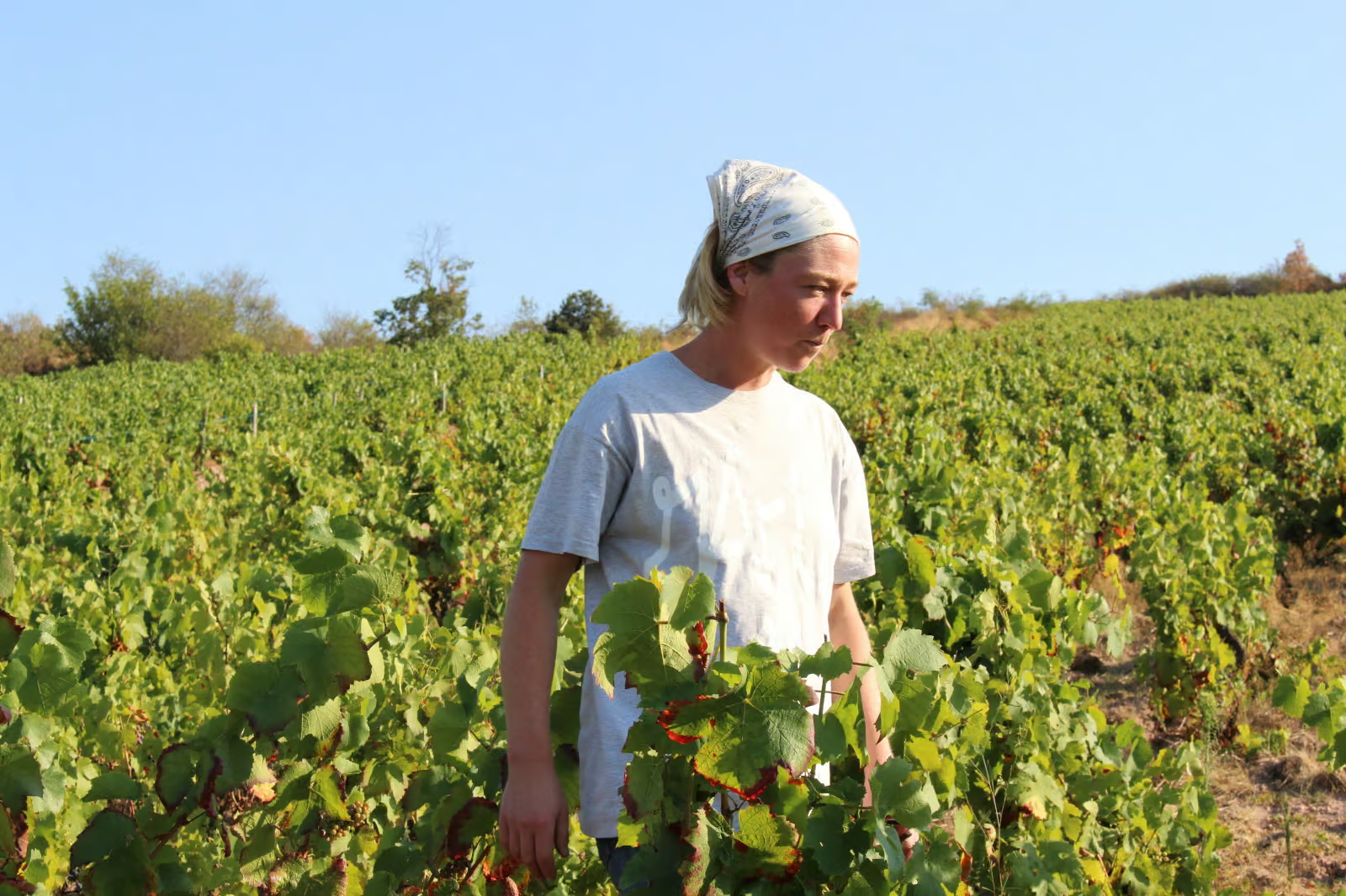


Table of Content
“Internationally-beloved Fleurie vigneronne Julie Balagny passed away suddenly on July 1st at the age of forty-five. The cause was a heart attack, which occurred in the painfully novelistic circumstance of the wedding of her half-sister, a cardiologist.” Aaron Ayscough
From Paris to Beaujolais: The Beginning of a Different Journey
Some people are born into the world of wine, while others choose to discover it, leaving behind everything they had previously taken for granted. Julie Balagny’s story began far from the vineyards, in Paris, and evolved into a personal quest that eventually led her to the heart of Beaujolais.
“I was born and raised in Paris. As a little girl, I was fascinated with wine; I'd see my mom spending all day in the kitchen cooking, then having my dad come home with a bottle, putting it on the table: how it was just as important as the food. This marked me. I was always amazed how people took such pleasure in drinking wine, and wondered how something so magic and special could come out of a bottle.”
In 1999, drawn by the land, she left the city behind to experience rural life for the first time in southern France, near Perpignan. There, she worked at a wine estate, but the experience that would have a deeper influence on her way of thinking was taking place right next door.
The Tomato That Changed Her Way of Thinking
In an interview with Burgundy-Report, she recalled a neighbouring biodynamic farm. It wasn't a theoretical discussion about agriculture, nor a complex winemaking discovery that changed her perspective. It was a tomato!
“Next to the domaine was a farm where everything was biodynamic – I thought I had never tasted such a beautiful tomato as from there – I was hooked on this approach. I first studied a BTS in Cahors before moving to Beaujolais in 2009, starting with 3.20 hectares of vines in Fleurie.”
“I immediately fell in love with this 3.2-hectare vineyard, with all the vines gathered together, in the middle of the forest, next to the river. The property also included 2 hectares of meadows and 3 hectares of woodland.”
Vines, woodland, meadows and animals coexisted on the property she chose to call home. Her approach was to create an environment in which all these elements would complement one another.
As she explained in a presentation of her estate by the American importer Louis/Dressner Selections:
“Ιn the spirit of working biodynamically, I knew this was a perfect place to start a polyculture. The vines support the woods, the woods supply the livestock, the livestock supplies the soil: everything works together, everything is coherent.”
In 2014, she discovered the old farmhouse that would become her home, in Les Thorins, the oldest part of the Moulin-à-Vent appellation. The building dates back to the 18th century and once housed servants from the nearby château.
"Yes this little enclave in Les Thorins was home to many migrant workers who came from Italy – Les Thorins was a little Italy."
Her Winemaking and Philosophy
Julie made her first Beaujolais wines in Yvon Métras' cellar, before finding a place of her own in Fleurie.
She worked with carbonic maceration, using whole bunches, without pumping over or punching down the cap. She had a few old barrels and used a very old wooden press.
As she explained, her wines were made exclusively from old vines on hillside slopes, all farmed organically and in the “old-fashioned way”. Each vintage, however, had its own demands. The winemaker's role was to understand and respond to them, without imposing a predetermined idea of what the wine should be.
Her Position on Natural Wine
“I don't feel integrated in it, or feel in any way like an extremist. I think the point is to be a vigneron , to work with each vintage and to use as little intervention as possible.
A wine has to be good, and everyone has to like it. Well maybe not everybody... But at least most!
I can't stand flawed , dirty wine. If I can work sulfur free, I go for it. It's not so I can say I don't work with sulfur , it's a choice based on ever changing circumstances. So far it's worked, so I do it.”
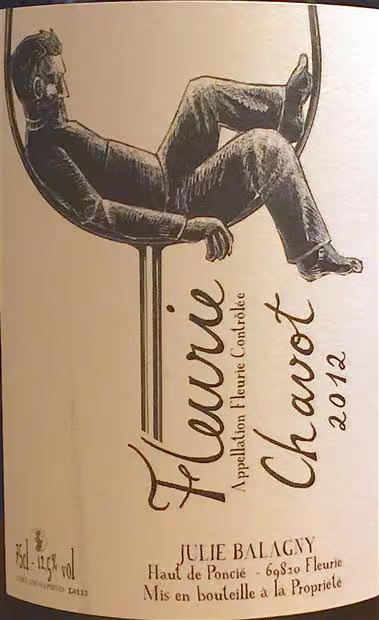
This freedom was also reflected in her labels. The names and labels of her wines changed from one vintage to the next, while her decision to declassify her entire 2018 production to Vin de France demonstrated her willingness to follow her own direction, even when it did not align with the conventions of the appellation system.
"I already have to pay too much every year for certification. The system is very well organised, but it doesn't seem to work for me. I question everything; it's my style.”
Her wines, predominantly made from Gamay, represented different interpretations of the soils in her vineyards, as well as the characteristics of each vintage, expressing a deeply personal relationship with the land.
Freedom as a Way of Life and Winemaking
In his tribute to Julie, journalist and writer Aaron Ayscough described her in these words:
“To anyone who asked, Balagny would cheerfully admit to being the black sheep in a family of doctors and ballet dancers. Her ramshackle, fixer-upper farmstead in the hamlet of Moulin-à-Vent, where she lived among actual sheep (and chickens, dogs, ducks, volunteers, and various lost souls), often seemed like an extravagant repudiation of her upbringing. But it also evidenced the genuine, wide-eyed love Balagny felt for her adoptive rural winemaking milieu.”
Her influence, therefore, extended beyond the bottles she produced. It also encompassed the people she encouraged, the relationships she built and the freedom with which she embraced a different way of life.
The Legacy of Julie Balagny
In November, when Beaujolais once again turns its attention to Gamay, it is easy to think of the region through the celebration of Nouveau. Julie Balagny's story reminds us, however, that Beaujolais is much more than a wine released every autumn.
It is a place shaped by people, vineyards, personal journeys and different ways of understanding agriculture and wine.
Julie did not follow a ready-made path. She sought her own, guided by curiosity, a connection with nature and the desire to work on her own terms.
And perhaps this is her most meaningful legacy: the reminder that behind a wine there can be an entire life — in her case, a life of freedom — and that, sometimes, the wines that stay with us the longest are those that allow us to get to know a little better the person who created them.
P.S. In order to paint a more complete portrait of Julie and allow readers to walk, at least in their imagination, along the path she carved out for herself, I chose to build this article primarily around Julie's own words, as well as the perspectives of people who had the opportunity to know her.
SOURCES
More Articles
Date
21 June 2025
Sustainability and Great Greek Wines 2025
Great Greek Wines 2025 celebrates top Greek wines through strict judging, blind tastings, and sustainability criteria. The new “Green Label” honors wines with strong environmental values, spotlighting Greek wine's evolution and global potential.
Text
Ioannis Theocharis
read
5 min
Date
22 May 2025
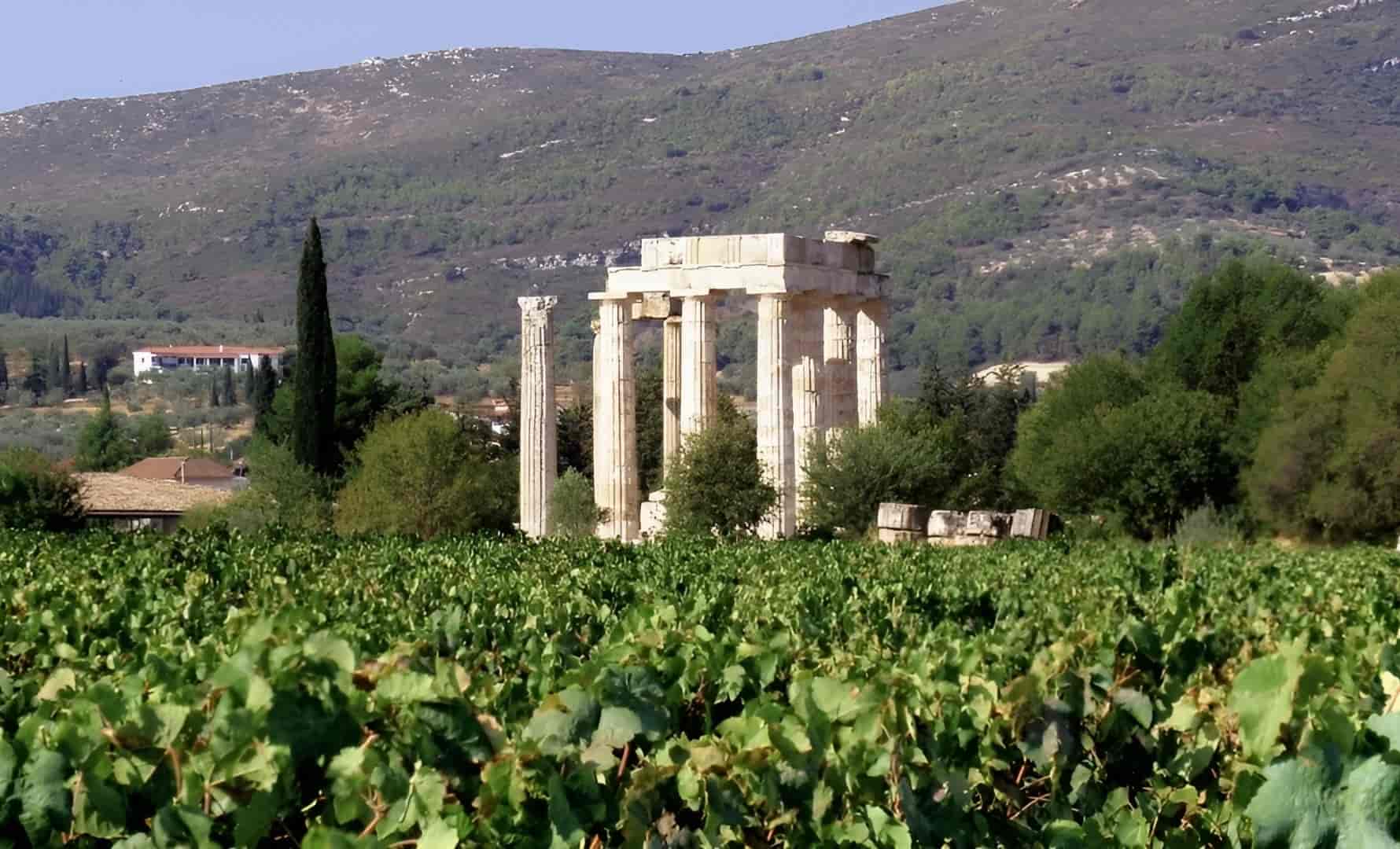
Nemea and Nemea Lions
An in-depth look at Nemea's viticultural identity through the legacy of Thanasis Papaioannou, the emergence of the Nemea Lions certification, and how terroir-driven wines like "Terroir Papaioannou" are shaping the region's future.
Text
Ioannis Theocharis
read
5 min
Date
22 February 2026
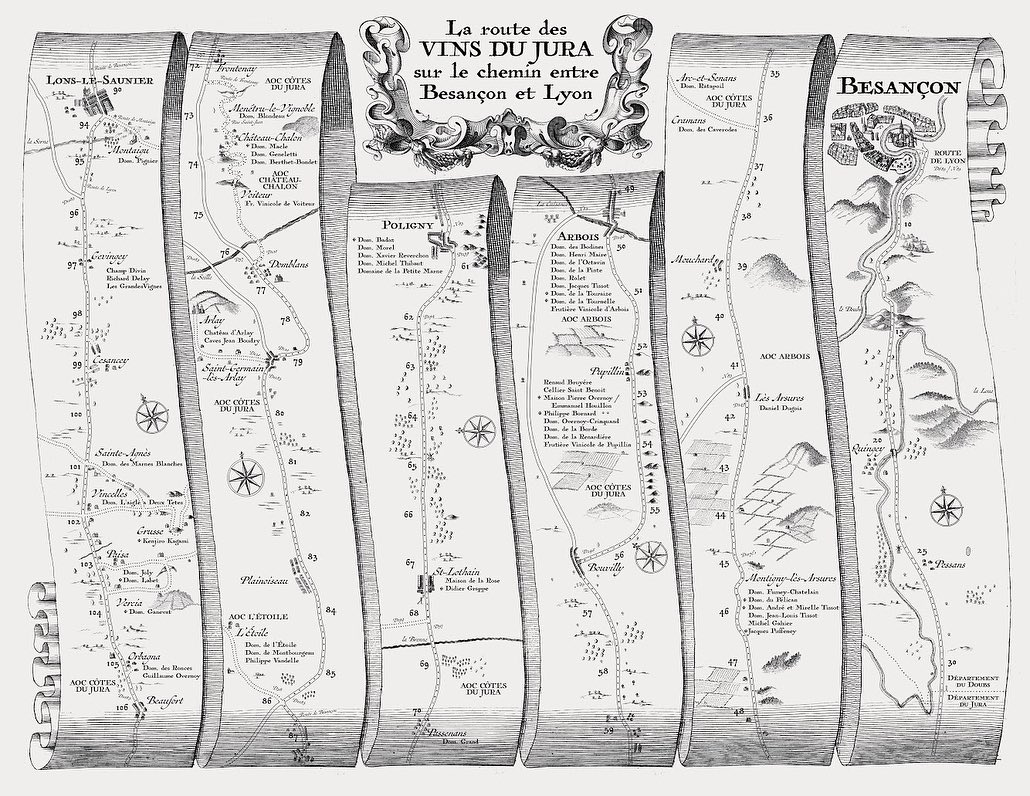
Jura: An Honest Relationship
Jura is one of France’s most authentic wine regions, where ancient soils, climate challenges, and dedicated growers shape truly honest wines.
Text
Ioannis Theocharis
read
5 min

Wine news+++ From Around the world+++
Wine news+++ From Around the world+++
Wine news+++ From Around the world+++
Wine news+++ From Around the world+++
Wine news+++ From Around the world+++
Wine news+++ From Around the world+++
Wine news+++ From Around the world+++
Wine news+++ From Around the world+++
Wine news+++ From Around the world+++
Wine news+++ From Around the world+++
Wine news+++ From Around the world+++
Wine news+++ From Around the world+++
Wine news+++ From Around the world+++
Wine news+++ From Around the world+++
Wine news+++ From Around the world+++
Wine news+++ From Around the world+++
Wine news+++ From Around the world+++
Wine news+++ From Around the world+++
Wine news+++ From Around the world+++
Wine news+++ From Around the world+++
Wine news+++ From Around the world+++
Wine news+++ From Around the world+++
Wine news+++ From Around the world+++
Wine news+++ From Around the world+++
Wine news+++ From Around the world+++
Wine news+++ From Around the world+++
Wine news+++ From Around the world+++
Wine news+++ From Around the world+++
Wine news+++ From Around the world+++
Wine news+++ From Around the world+++
Wine news+++ From Around the world+++
Wine news+++ From Around the world+++
Wine news+++ From Around the world+++
Wine news+++ From Around the world+++
Wine news+++ From Around the world+++
Wine news+++ From Around the world+++
Wine news+++ From Around the world+++
Wine news+++ From Around the world+++
Wine news+++ From Around the world+++
Wine news+++ From Around the world+++
Wine news+++ From Around the world+++
Wine news+++ From Around the world+++
Wine news+++ From Around the world+++
Wine news+++ From Around the world+++
Wine news+++ From Around the world+++
Wine news+++ From Around the world+++
Wine news+++ From Around the world+++
Wine news+++ From Around the world+++
Wine news+++ From Around the world+++
Wine news+++ From Around the world+++
Wine news+++ From Around the world+++
Wine news+++ From Around the world+++
Wine news+++ From Around the world+++
Wine news+++ From Around the world+++
Wine news+++ From Around the world+++
Wine news+++ From Around the world+++
Wine news+++ From Around the world+++
Wine news+++ From Around the world+++
Wine news+++ From Around the world+++
Wine news+++ From Around the world+++
Wine news+++ From Around the world+++
Wine news+++ From Around the world+++
Wine news+++ From Around the world+++
Wine news+++ From Around the world+++
Wine news+++ From Around the world+++
Wine news+++ From Around the world+++
Wine news+++ From Around the world+++
Wine news+++ From Around the world+++
Wine news+++ From Around the world+++
Wine news+++ From Around the world+++
Wine news+++ From Around the world+++
Wine news+++ From Around the world+++
Wine news+++ From Around the world+++
Wine news+++ From Around the world+++
Wine news+++ From Around the world+++
Wine news+++ From Around the world+++
Wine news+++ From Around the world+++
Wine news+++ From Around the world+++
Wine news+++ From Around the world+++
Wine news+++ From Around the world+++
Wine news+++ From Around the world+++
Wine news+++ From Around the world+++
Wine news+++ From Around the world+++
Wine news+++ From Around the world+++
Wine news+++ From Around the world+++
Wine news+++ From Around the world+++
Wine news+++ From Around the world+++
Wine news+++ From Around the world+++
Wine news+++ From Around the world+++
Wine news+++ From Around the world+++
Wine news+++ From Around the world+++
Wine news+++ From Around the world+++
Wine news+++ From Around the world+++
Wine news+++ From Around the world+++
Wine news+++ From Around the world+++
Wine news+++ From Around the world+++
Wine news+++ From Around the world+++
Wine news+++ From Around the world+++
Wine news+++ From Around the world+++
Wine news+++ From Around the world+++
Stay tuned for an exclusive experience like no other!